Home › North Carolina History › Black History
On February 1, 1960, four North Carolina A&T students sat at the whites-only lunch counter at the Woolworth store on Elm Street in Greensboro, and sit-ins spread across the South. This page follows Black history in North Carolina from enslaved labor at Stagville to the Pea Island rescue crew and the 1898 Wilmington coup.
- 1771-1865Stagville: 94 years of enslaved labor
- Oct 11, 1896Pea Island rescue
- Nov 10, 1898Wilmington coup
- Feb 1, 1960Greensboro sit-ins
- Short Version
- At a Glance
- Slavery and the road to freedom
- The sea and the sound: Pea Island
- Learning and the Wilmington coup, 1873 to 1906
- The sit-ins, 1960
- Visit
- FAQ
The Short Version
Black North Carolinians built the state's farms, rescued shipwreck survivors, founded colleges and led the 1960 sit-ins, while the 1898 Wilmington coup and the laws that followed took away their votes. The sources below are state archives, the National Park Service and North Carolina's encyclopedia. Where they disagree, both figures are shown.
At a Glance
| Date | What happened | Source |
|---|---|---|
| 1771 to 1865 | The Bennehan and Cameron families profited from enslaved labor on the land that is now Historic Stagville in Durham, for 94 years. | historicsites.nc.gov |
| c. 1799 | The Bennehan family house at Stagville was built. | historicsites.nc.gov |
| January 16, 1842 | Richard Etheridge was born on Roanoke Island. | nps.gov |
| c. 1851 | Four dwellings for enslaved families at Stagville's Horton Grove were built; they still stand. | historicsites.nc.gov |
| 1873 | Bennett College traces its start to the basement of Warnersville Methodist Episcopal Church in Greensboro, founded by newly freed people to educate freed people and train teachers. | ncpedia.org |
| February 1880 | Richard Etheridge took command of the Pea Island Life Saving Station, the first African American to hold the post of keeper there. | nps.gov |
| October 11, 1896 | During a hurricane, Etheridge's crew rescued all nine people aboard the grounded schooner E. S. Newman. | nps.gov |
| November 10, 1898 | A white mob forced out Wilmington's elected city officials and attacked the city's Black community; the event is called the 1898 Wilmington coup. | dncr.nc.gov |
| 1899 | A legislative committee drafted the Grandfather Clause, which largely blocked Black men from voting. | dncr.nc.gov |
| 1926 | Bennett College was converted into a college for women. | ncpedia.org |
| February 1, 1960 | Four North Carolina A&T students sat at the whites-only lunch counter at the Woolworth store on Elm Street in Greensboro. | ncpedia.org |
| 1960 | Bennett students joined pickets of downtown Greensboro restaurants. | ncpedia.org |
| By the end of summer 1960 | Sit-ins had spread to other eating places and an agreement was reached to end segregation in Greensboro's public eating places. | ncpedia.org |
| May 2006 | The 1898 Wilmington Race Riot Commission, created by the General Assembly in 2000, released its final report. | dncr.nc.gov |
Slavery and The Road to Freedom
Historic Stagville near Durham was one of the largest plantations in North Carolina. By the 1860s the Cameron heirs held more than 1,000 enslaved people and over 30,000 acres. Today the state tells the story of the people who lived and worked there. (source)
Not everyone stayed. The NC African American Heritage Commission's Freedom Roads project marks the roads, rivers and ports that enslaved people used to seek freedom, and honors the people who helped them. Some sites are part of the National Park Service Network to Freedom. (source)
The Sea and The Sound: Pea Island
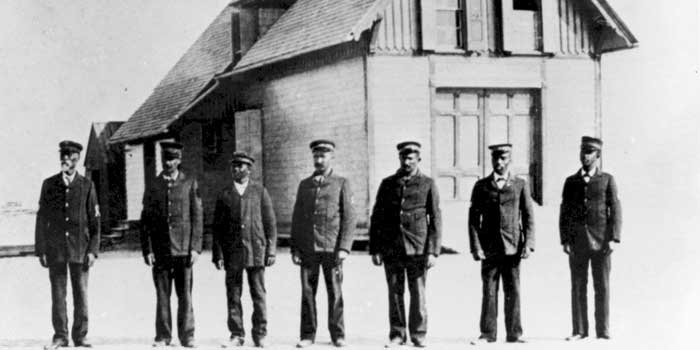
Richard Etheridge was born enslaved on Roanoke Island in 1842. He joined the U.S. Life Saving Service in 1875 and took command at Pea Island in 1880. His crew served until the station closed in 1947. (source)
On the night of October 11, 1896, in a hurricane, the crew saved all nine people on the E. S. Newman. The crew later received the Coast Guard's Gold Life-Saving Medal. Sources differ on the year, 1995 or 1996. (source)
Learning and The Wilmington Coup, 1873 to 1906
Freed people founded schools of their own. Bennett College began in 1873 in a church basement in Greensboro and was chartered as a college on March 11, 1889. (source)
On November 10, 1898, a white mob forced out Wilmington's Republican mayor and city officials and attacked a Black-owned newspaper. Counts of the dead are uncertain: the coroner gave fourteen and the 2006 state report said as many as sixty. The state set up a commission in 2000 to document what happened and its effect on Black residents. (source)
The Sit-Ins, 1960
On February 1, 1960, four A&T students sat at the Woolworth lunch counter on Elm Street. The manager closed the counter rather than have them arrested. More students joined in the days after. (source)
Women from Bennett College took part, joining pickets in 1960. By the end of that summer, Greensboro agreed to end segregation in public eating places. The old Woolworth building is now the International Civil Rights Center and Museum at 134 S. Elm Street. (source)
Where to Visit
- International Civil Rights Center & Museum, Greensboro: The former Woolworth store where the sit-in began; permanent and special exhibits, tours and programs.
- Historic Stagville, Durham: A 165-acre state historic site with 1850s dwellings for enslaved families, a barn from 1860 and a house from 1799.
- Charlotte Hawkins Brown Museum, Gibsonville: State historic site on the former Palmer Memorial Institute campus, founded in 1902.
- Historic Halifax Underground Railroad Trail: A quarter-mile trail with waysides about local freedom seekers.
- Freedmen's Colony at Fort Raleigh, Manteo: National historic site on Roanoke Island; the Freedom Trail runs from Fort Raleigh to Freedmen's Point.
- Somerset Place, Creswell: State historic site with a 75-minute tour covering 1865 to the present.
- Historic Edenton: Tours follow places from Harriet Jacobs's book.
On this site: Historic Sites, Outer Banks.
Still Unconfirmed
- The Pea Island crew's Gold Lifesaving Medal year is 1996 per the National Park Service and 1995 per the state Department of Natural and Cultural Resources, so neither is printed as settled.
- The number killed in Wilmington in 1898 is uncertain: the coroner counted 14 and the 2006 state commission report says as many as sixty.
- Richard Etheridge was appointed in 1879 per the National Park Service and took command in February 1880.
- Hours and admission for the museum and for Stagville were not on the pages we read, so we link to the official sites. A claim that Joseph Jenkins or Bennett College originated the sit-in plan was not confirmed and is left out.
Frequently Asked Questions
When did the Greensboro sit-ins begin?
On February 1, 1960, four North Carolina A&T students sat at the whites-only lunch counter at Woolworth on Elm Street in Greensboro.
Can I visit the Woolworth lunch counter?
Yes. The building is now the International Civil Rights Center & Museum at 134 S. Elm Street, Greensboro. Check the museum site for hours.
Who was Richard Etheridge?
He was born on Roanoke Island in 1842 and became keeper of the Pea Island Life Saving Station in 1880, the first African American to hold that post. His crew rescued nine people from the E. S. Newman on October 11, 1896.
What was the 1898 Wilmington coup?
On November 10, 1898, a white mob forced out the city's elected officials and attacked the Black community. A state commission published its report in May 2006.
What is Freedom Roads?
A statewide trail project from the NC African American Heritage Commission that recognizes roads, rivers and ports used by enslaved people seeking freedom.
More North Carolina History
- History Hub
- Timeline
- Historic Sites
- Legends Trail
- Appalachian Music
- Civil War
- Lighthouses
- Revolutionary War
- Textiles and Tobacco
- Wright Brothers and Aviation
Sources
- NCpedia: Greensboro Sit-Ins
- International Civil Rights Center & Museum
- NPS: Richard Etheridge
- NC DNCR: Pea Island Lifesavers marker
- NC DNCR: 1898 Wilmington Race Riot Commission
- NCpedia: Bennett College
- NC Historic Sites: Historic Stagville history
- NC African American Heritage Commission: Freedom Roads
- NC DNCR blog: 10 places to explore Black history
Read on October 27, 2026. Secondary sources are labelled in their titles. How we check: editorial standards; spot a mistake? tell us.
Cite this page: It's North Carolina, “Black History in North Carolina”, itsnorthcarolina.com/history/black-history/ (updated ). By the It's North Carolina editorial team. Free to quote with attribution and a link to this page; data and tables are licensed CC BY 4.0.